There are no products listed under this category.
BOTANICAL RECIPES FOR YOU
Bee Kind NZ | From the Garden
Natural Herbal Recipes & Botanical Preparations
The Bee Kind Botanical Journal
Many of the most interesting botanical ingredients grow in our own gardens. From native New Zealand kawakawa to calendula, rosemary, thyme and lavender, familiar plants have long histories of use in herbal preparations.
At Bee Kind NZ, I work with botanical oils, beeswax and plant ingredients every day. Drawing on my studies in herbal medicine and my collection of herbal reference books, I'm sharing simple, practical ways to explore garden plants at home. These are introductory household recipes, not the formulas used in Bee Kind products.
In this recipe collection:
Kawakawa oil & balm | Calendula oil & balm | Rosemary hair oil | Thyme infusion | Basil herb vinegar | Lavender bath salts & chamomile oil
1. Kawakawa Infused Oil & Beeswax Balm
Piper excelsum (also known as Macropiper excelsum) | Aotearoa New Zealand
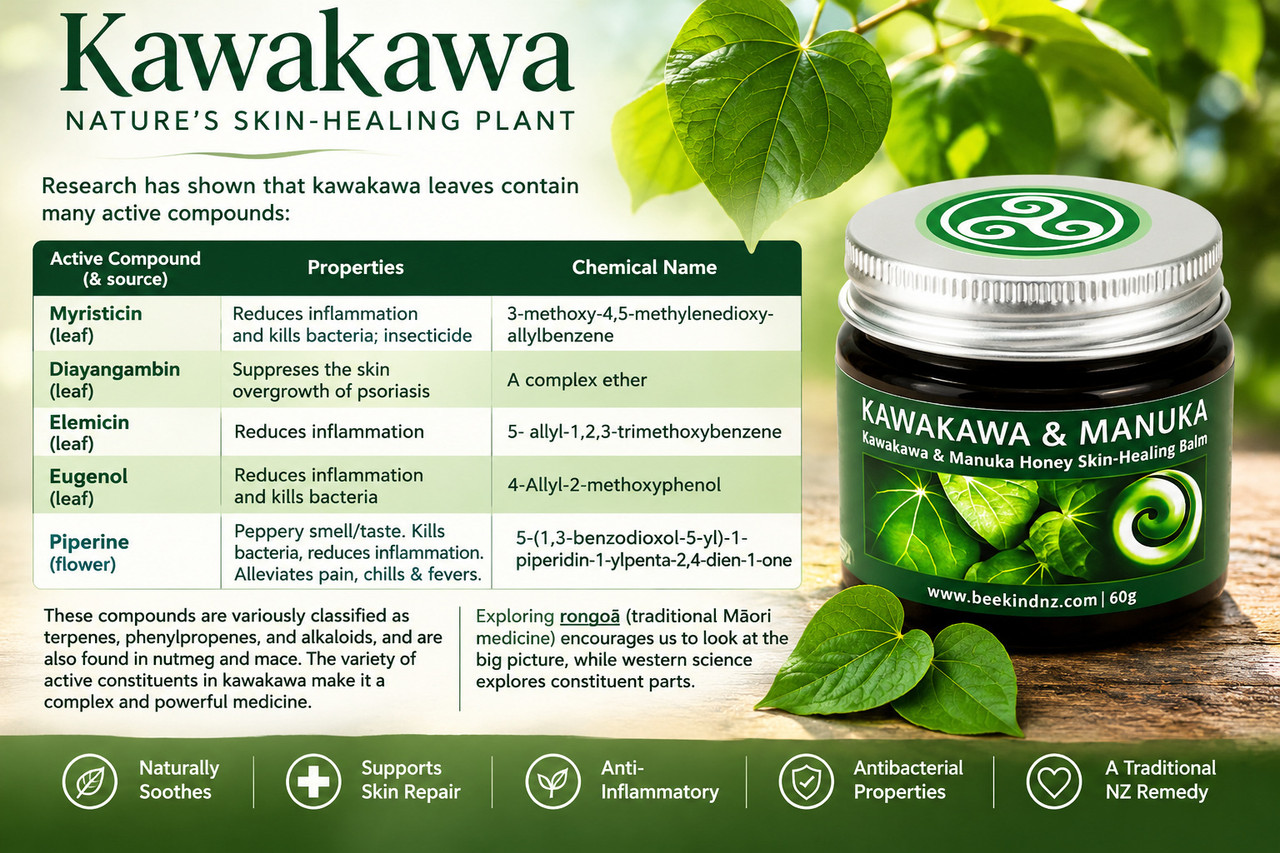
Kawakawa is an important plant in rongoā Māori. Its heart shaped leaves have a distinctive peppery aroma and contain various naturally occurring plant constituents. Harvest respectfully, obtain permission where needed, and take only a small amount from healthy plants.
Recipe A: Simple Kawakawa Infused Oil
Ingredients: 10 g fully dried, correctly identified kawakawa leaves; 100 ml olive or sunflower oil.
Method:
- Check that the leaves are completely dry and free of surface moisture. Crumble them into a clean, dry heatproof jar.
- Add the oil and place the jar in a gently warmed water bath, keeping the jar stable and avoiding splashes of water entering the oil.
- Warm gently for about 1 to 2 hours without frying or overheating the plant material.
- Allow to cool, strain thoroughly through a clean fine filter and transfer the oil to a dry, labelled bottle.
Recipe B: Homemade Kawakawa Beeswax Balm
Ingredients: 50 ml prepared kawakawa infused oil; 6 g beeswax pellets or grated beeswax.
Method: Melt the beeswax gently into the infused oil using a double boiler. Stir until fully dissolved. Pour into a small, clean, dry tin and allow to set. If the texture is too firm, remelt with a little extra oil; if too soft, add a little more beeswax.
Bee Kind connection: We also make our own Bee Kind Kawakawa & Mānuka Honey Balm, a separate finished skincare product.
2. Calendula Flower Oil & Hand Balm
Calendula officinalis | Pot marigold
Calendula's bright orange and yellow flowers are popular in botanical skincare and have a long history in European herbal traditions. Use the petals of correctly identified Calendula officinalis, not unrelated ornamental marigolds.
Recipe A: Calendula Infused Oil
Ingredients: 10 g completely dried calendula petals; 100 ml sunflower or olive oil.
Method:
- Place the fully dried petals in a clean, dry glass jar and cover with the oil.
- Warm very gently in a water bath for 1 to 2 hours, keeping water out of the mixture.
- Cool, strain carefully and bottle in a clean, completely dry container.
Recipe B: Calendula Hand Balm
Ingredients: 50 ml calendula infused oil; 7 g beeswax.
Method: Melt the beeswax into the infused oil over gentle indirect heat. Stir and pour into a small dry tin. Allow to cool before closing the lid. Use sparingly on intact skin.
3. Rosemary Botanical Hair Oil
Salvia rosmarinus | Garden rosemary
Rosemary is familiar in New Zealand herb gardens and has a long history in aromatic and cosmetic preparations. This is a fragrant conditioning oil, not a treatment for hair loss.
Ingredients: 5 g fully dried rosemary leaves; 50 ml jojoba or sunflower oil.
Method:
- Place the completely dried rosemary in a clean, dry jar and cover with oil.
- Warm gently in a water bath for about 1 hour, taking care not to let water enter the oil.
- Cool and strain very thoroughly.
- Massage a small amount through the hair lengths before washing, then shampoo out. Avoid the eyes and discontinue if irritation occurs.
4. Garden Thyme Herbal Infusion
Thymus vulgaris | Common thyme
Thyme contains fragrant constituents including thymol and carvacrol. One of the simplest ways to enjoy its aroma is as a light culinary herb infusion.
Ingredients: 2 small sprigs washed fresh culinary thyme or 1 teaspoon dried culinary thyme; 250 ml freshly boiled water.
Method:
- Place the thyme in a cup or teapot.
- Pour over freshly boiled water, cover and steep for 5 minutes.
- Strain and enjoy warm as a culinary herbal drink.
This is a food recipe, not a medicinal dosage. Check with a qualified health professional about herbal products if pregnant, breastfeeding, taking medicines or managing a medical condition.
5. Fresh Basil Garden Vinegar
Ocimum basilicum | Sweet basil
Basil is an aromatic culinary herb with a fascinating history. This simple refrigerated infusion makes a fragrant vinegar for salad dressings.
Ingredients: 1 small handful fresh basil leaves, washed and dried; 250 ml commercially prepared white wine vinegar.
Method:
- Place the basil in a clean jar and pour over the vinegar.
- Cover and refrigerate for 24 hours to infuse the flavour.
- Strain, keep refrigerated and use promptly in salad dressings. Do not use for shelf stable bottling or home canning.
6. Lavender Bath Salts & Chamomile Infused Oil
Lavandula angustifolia & Matricaria chamomilla
Lavender and chamomile are traditional garden favourites, often used for their gentle fragrances in botanical preparations.
Recipe A: Simple Lavender Bath Salts
Ingredients: 200 g plain Epsom salts; 1 teaspoon fully dried culinary lavender flowers.
Method: Mix the salts and flowers in a dry bowl. Store in a tightly closed, dry jar. Add 1 to 2 tablespoons to a warm bath, ideally with the flowers inside a reusable muslin sachet so they do not block the drain. Avoid use on irritated or broken skin.
Recipe B: Chamomile Flower Infused Oil
Ingredients: 5 g fully dried German chamomile flowers; 50 ml sunflower oil.
Method: Place the dried flowers in a clean, dry jar with the oil. Warm gently in a water bath for about 1 hour, cool and strain thoroughly. Use a small amount as a simple skin oil after patch testing. Avoid if allergic to chamomile or related daisy family plants.
Before You Begin: Herbal Recipe Safety
Always identify plants accurately and avoid those treated with sprays or collected from contaminated areas. Use fully dried plant material for oil infusions, keep water out of oils and balms, clean and dry equipment thoroughly, and make small batches for personal use.
These simple water free preparations contain no added preservative, but that does not make them indefinitely stable. Date each batch, store away from heat and light, and discard if any unusual smell, colour, mould or other change develops. Do not use homemade balms on open wounds, infected skin or near the eyes. Patch test on intact skin first.
Traditional use and the presence of interesting plant compounds do not prove that a finished preparation treats disease. These recipes are educational and are not a substitute for medical care. Rongoā Māori is a distinct living tradition deserving respectful attribution and context.
About the Bee Kind Botanical Journal
I'm sharing these recipes as an introduction to the plants and practical botanical preparations I enjoy working with. My background includes studying herbal medicine and creating Bee Kind products with beeswax and botanical oils. As the journal grows, I'll add my own photographs, further reading and references from my herbal medicine library.
Looking for finished botanical skincare? Explore the Bee Kind NZ collection of handmade beeswax and botanical products.
Bee Kind NZ | Inspired by nature, made in New Zealand